Data Flow
This document describes how data flows through the Squirrel Backend system for key operations.
Snapshot Creation (Async via Arq)
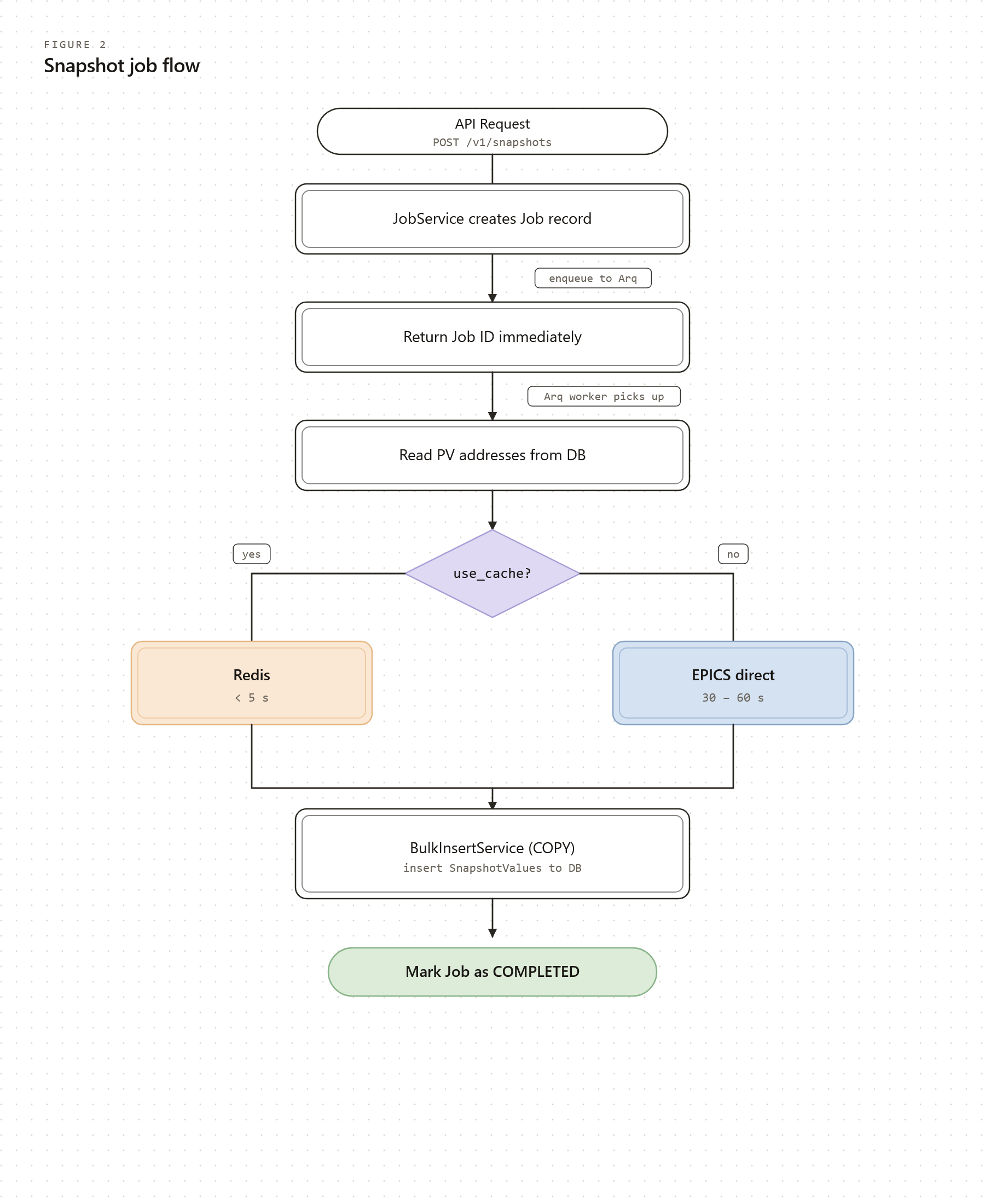
Snapshot creation is an asynchronous operation that can read PV values from Redis cache (fast) or directly from EPICS (slower but always current).
Performance Comparison
| Source | Time for 40K PVs | Notes |
|---|---|---|
| Redis Cache | <5 seconds | Uses cached values from PV Monitor |
| EPICS Direct | 30-60 seconds | Parallel reads with chunking |
Real-Time PV Monitoring
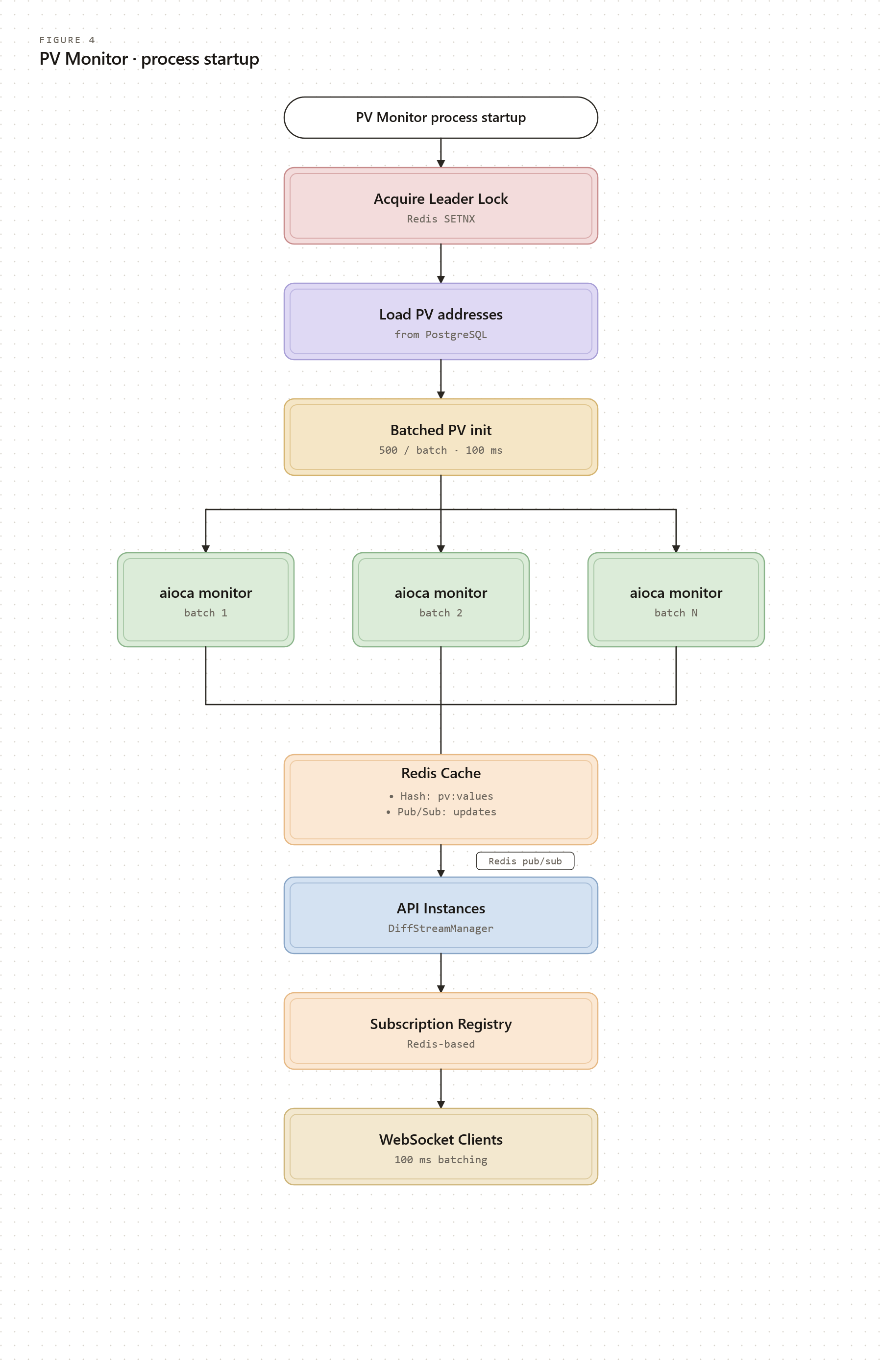
The PV Monitor process maintains a live cache of all PV values in Redis and broadcasts updates to connected WebSocket clients.
Batching Strategy
PV subscriptions are created in batches to prevent overwhelming the EPICS network:
| Parameter | Value | Purpose |
|---|---|---|
| Batch Size | 500 PVs | Prevents UDP packet flood |
| Batch Delay | 100ms | Allows network to stabilize |
| Total Time | ~8s for 40K PVs | Startup time |
WebSocket Updates
WebSocket clients receive diff-based updates to minimize bandwidth:
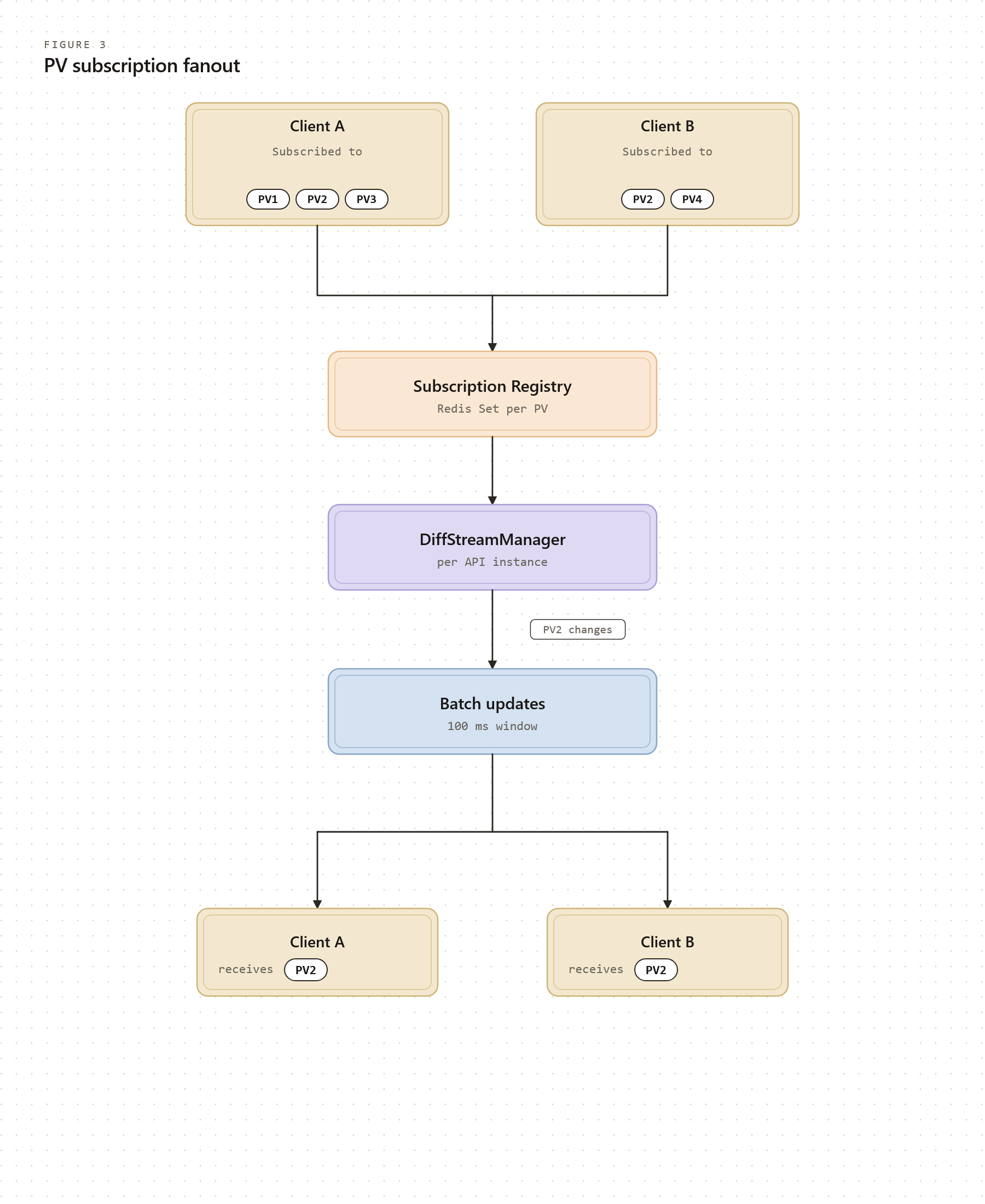

Bandwidth Savings
| Update Type | Payload Size | Bandwidth |
|---|---|---|
| Full snapshot | ~1MB for 40K PVs | High |
| Diff update | ~100B per changed PV | 10-100x less |
Snapshot Restore
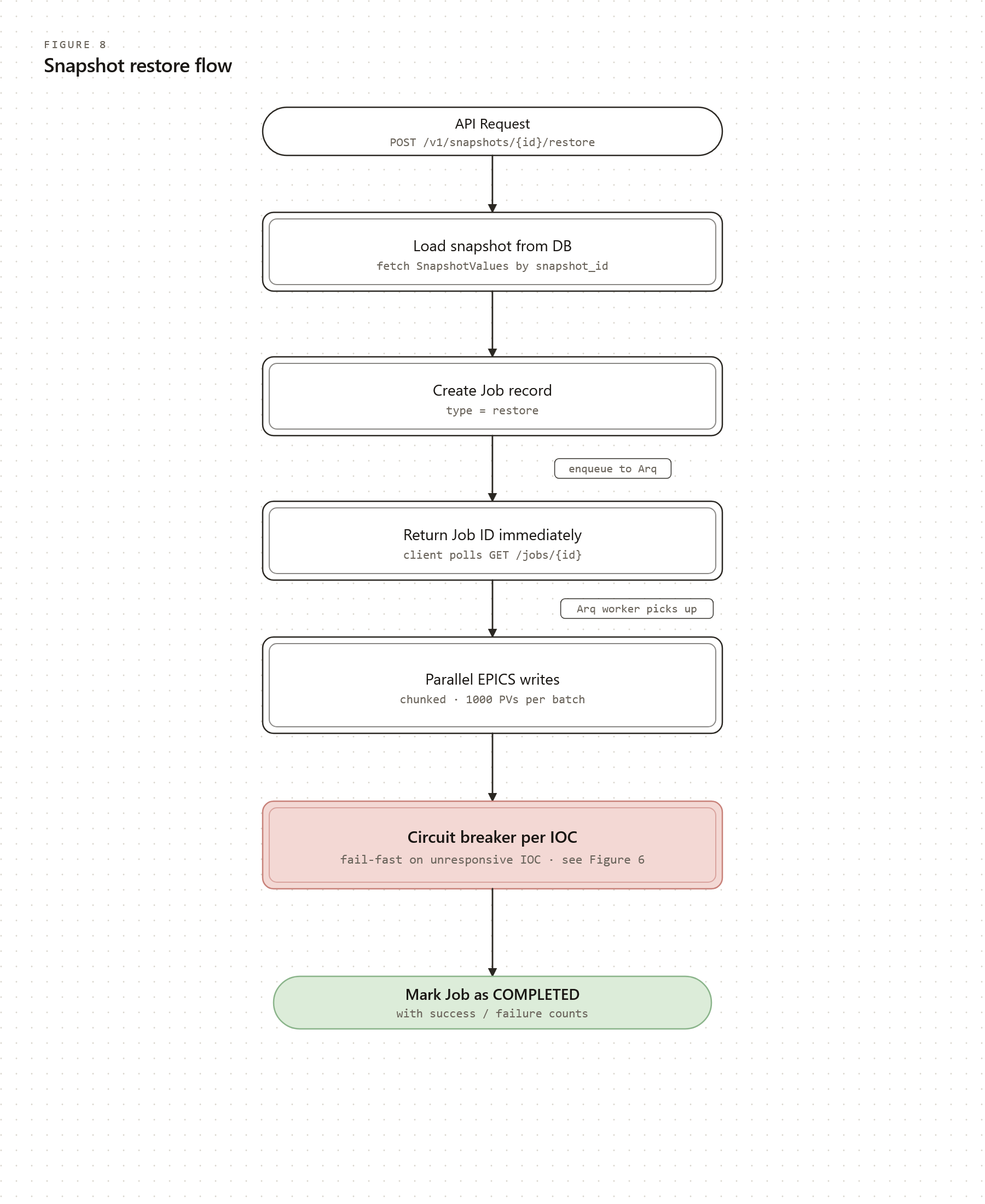
Restoring a snapshot writes values back to EPICS:
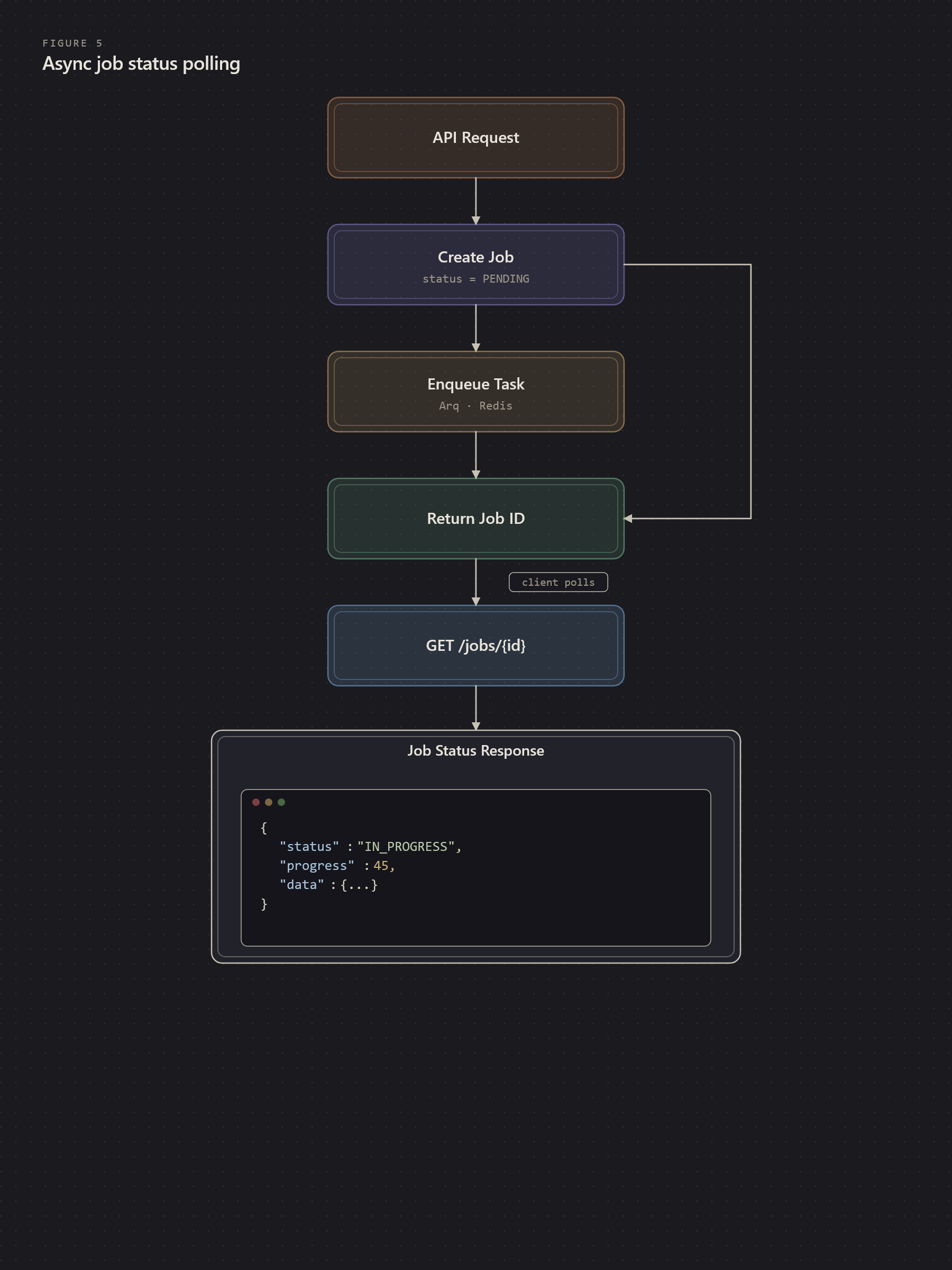
Job Tracking
All long-running operations use the job tracking system:
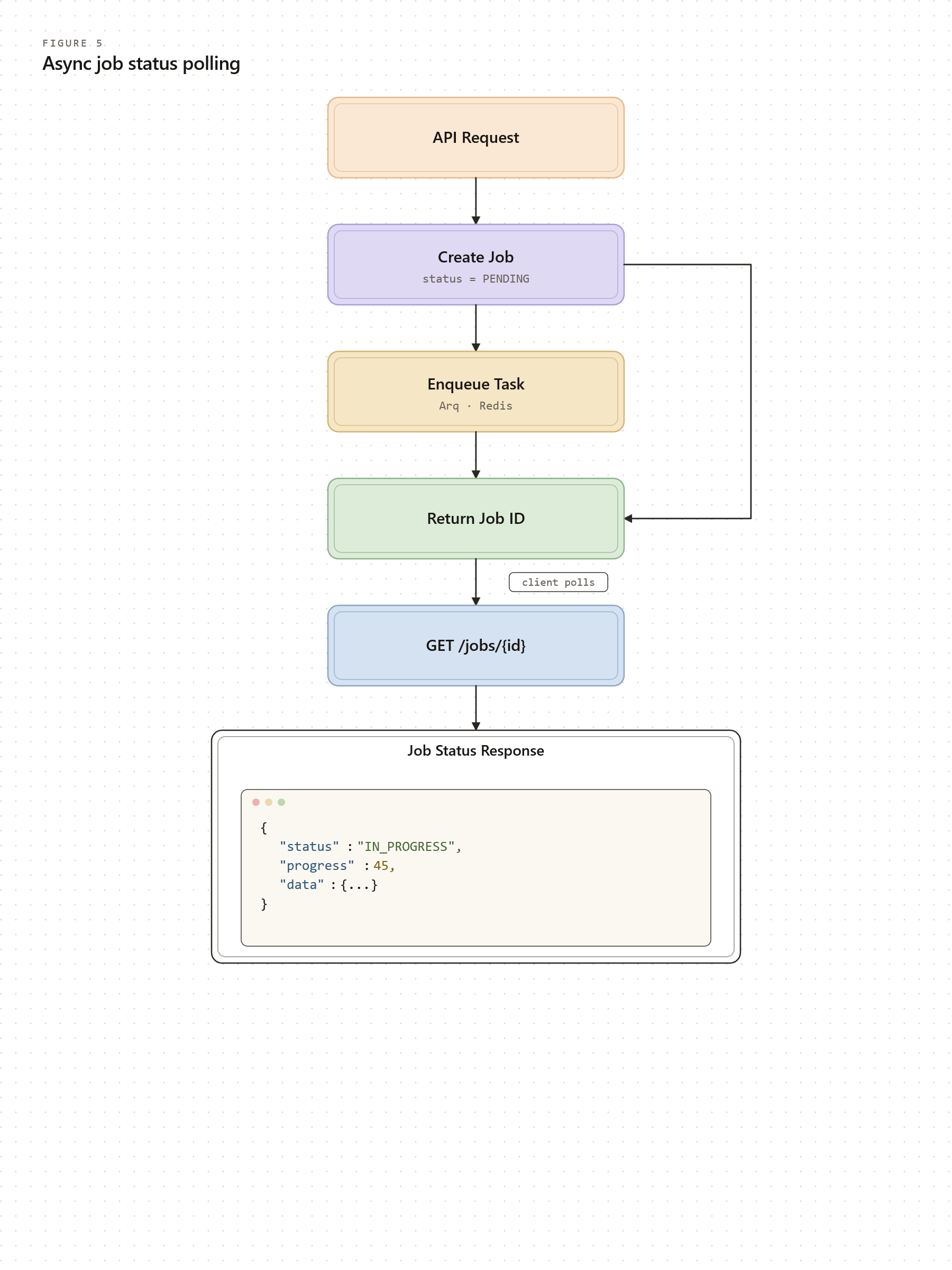
Job States
| State | Description |
|---|---|
PENDING |
Job created, waiting for worker |
IN_PROGRESS |
Worker processing |
COMPLETED |
Successfully finished |
FAILED |
Error occurred |
RETRYING |
Automatic retry in progress |